Getting the opportunity to see the North Korean border was both thrilling and exciting, so when I booked our plane tickets to South Korea, this tour was non-negotiable. I immediately searched for how to get there and, before I knew it, here we were, enjoying this once-in-a-lifetime experience.

To be honest, I’ve always dreamed of visiting North Korea in the future, but for now, seeing the border is enough. I might even say this was the highlight of our South Korea tour.
The DMZ stands for Demilitarized Zone, the border territory between South and North Korea.
Just a note: going there is very strict, and you must follow the rules. Before entering, South Korean soldiers will check your passport one by one, so always bring your passport with you. Also, taking photos is not allowed.
The tour is very informative because of the tour guide, and honestly, we really enjoyed it and learned a lot of new information about the South and North Korea War.
How much is the DMZ Tour in South Korea?
We have booked it thru Klook for ₱5,700 for 2 pax. Since you are required to book with a fully licensed tour guide, we opted to book a joiner tour instead. That means, you can’t do DIY tour in DMZ.
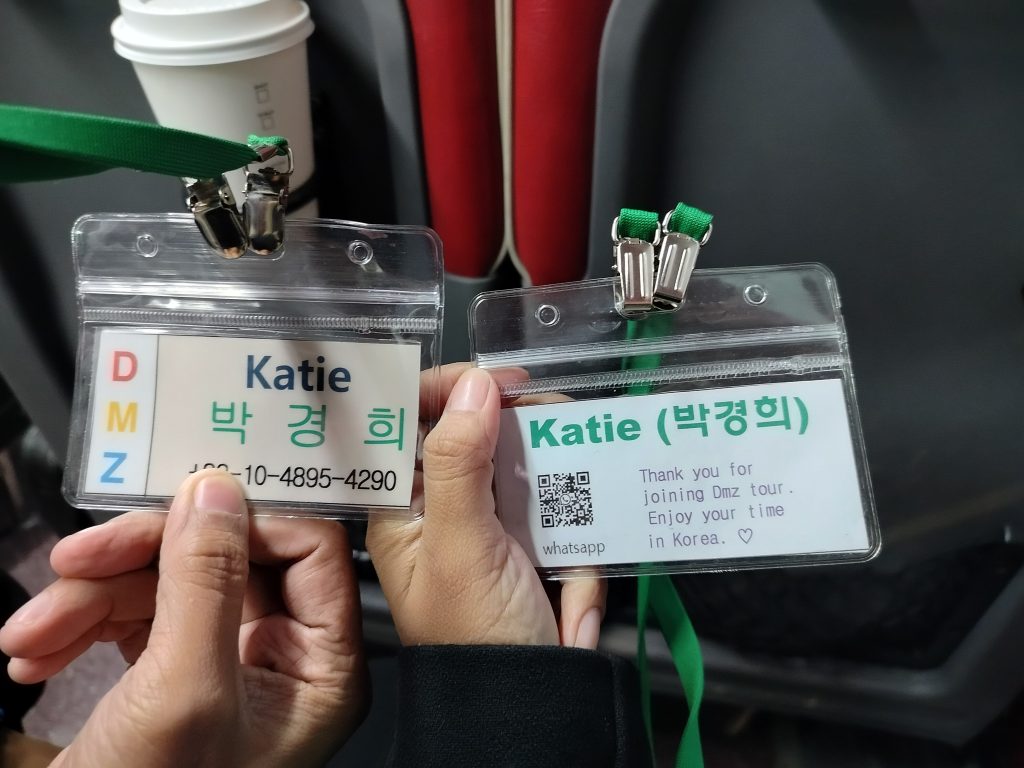
We were picked up by our tour bus at a specific meeting place in Myeongdong and were given IDs for easy identification. Also, don’t forget to bring your passport because the Korean army will check it before you can enter the gates. Without it, the entire tourists in the bus won’t be allowed to enter either. That’s how strict they are!
A few minutes into the drive, we arrived at our first stop, which was the Peace Park in Imjingak, a park just outside the DMZ. It serves as a historic site dedicated to the Korean War and the hope for the future reunification of the peninsula. So the virtual tour begins….
What to do in the DMZ Tour?
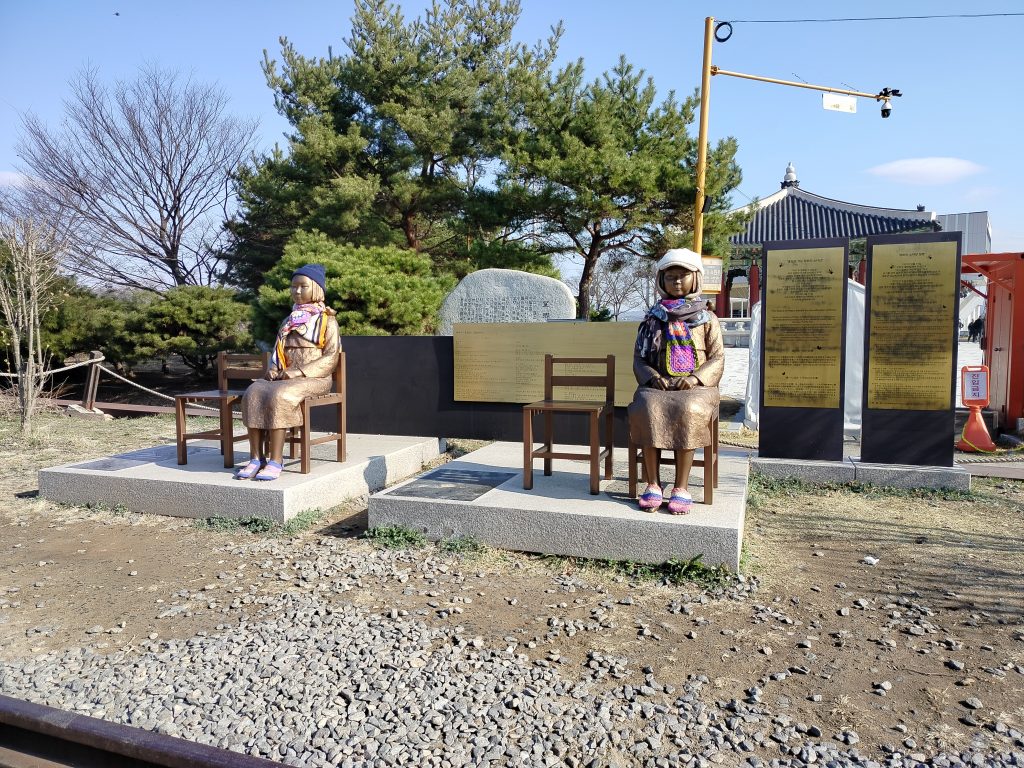
Statue of Peace
These twin bronze statues represent the “comfort women,” who were sexually enslaved by Japanese soldiers during World War II. The empty chairs beside the figures are intentionally placed to symbolize victims who died before receiving a formal apology, as well as to invite visitors to sit and reflect on this history. Local visitors often dress the statues with hats, scarves, and socks to keep them warm during the colder months.
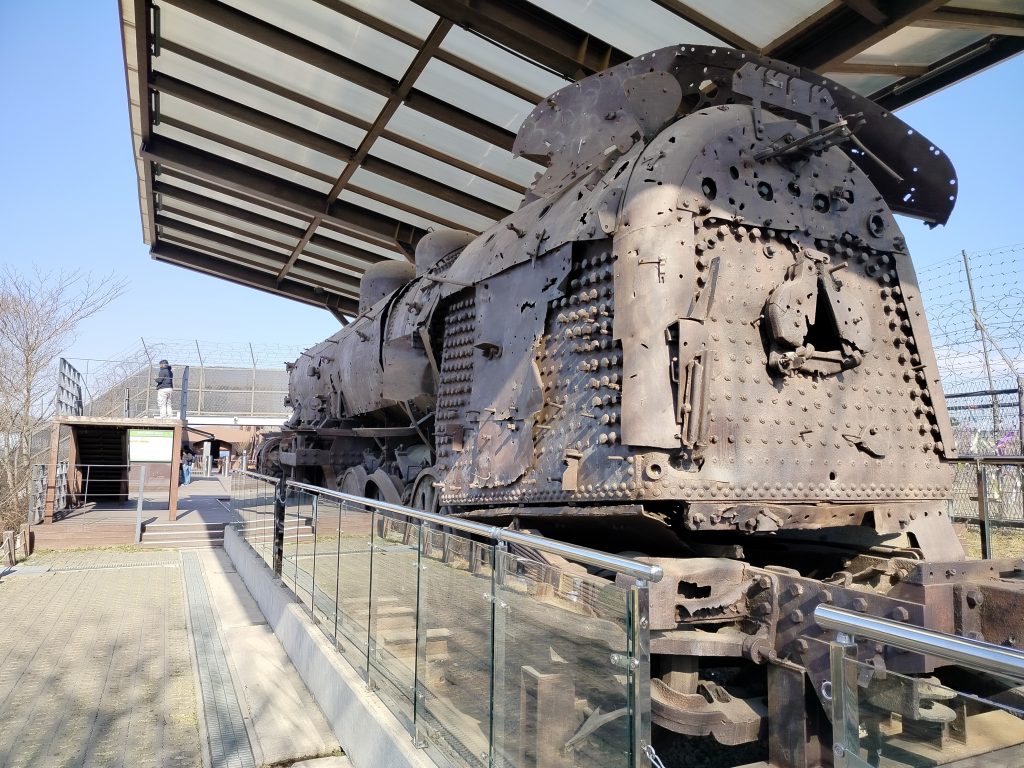
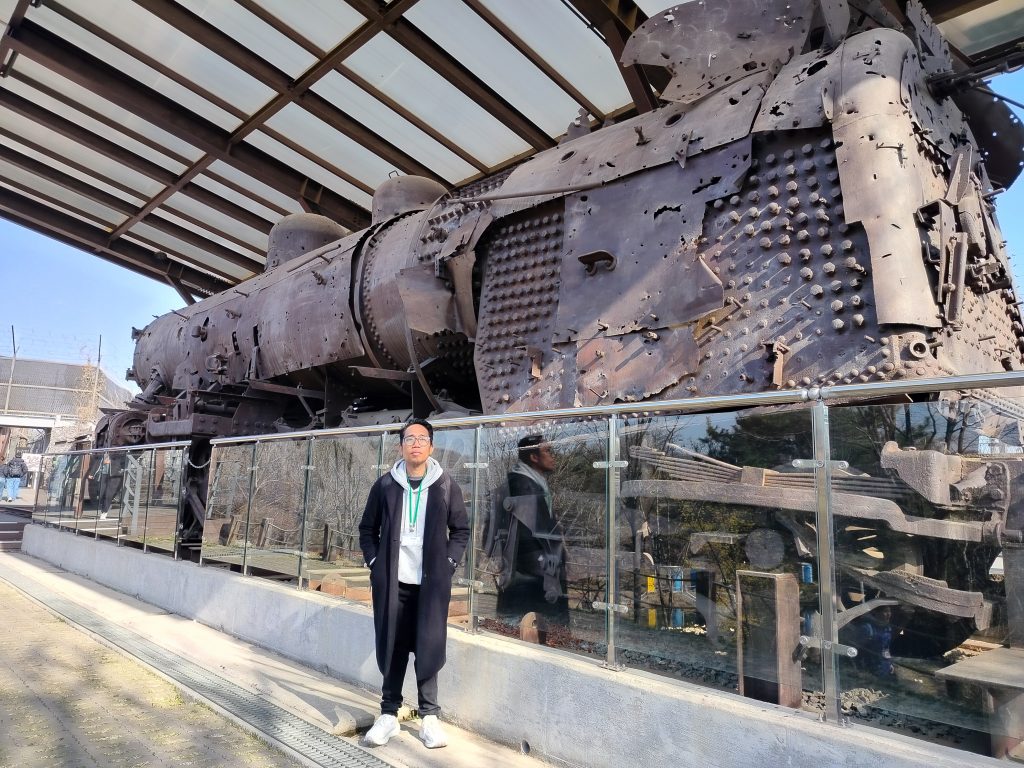
Steam Locomotive
The steam locomotive was one of the earliest forms of railway transport. It was bombed and derailed, and it even had many bullet holes as evidence of a brutal war between the two nations.
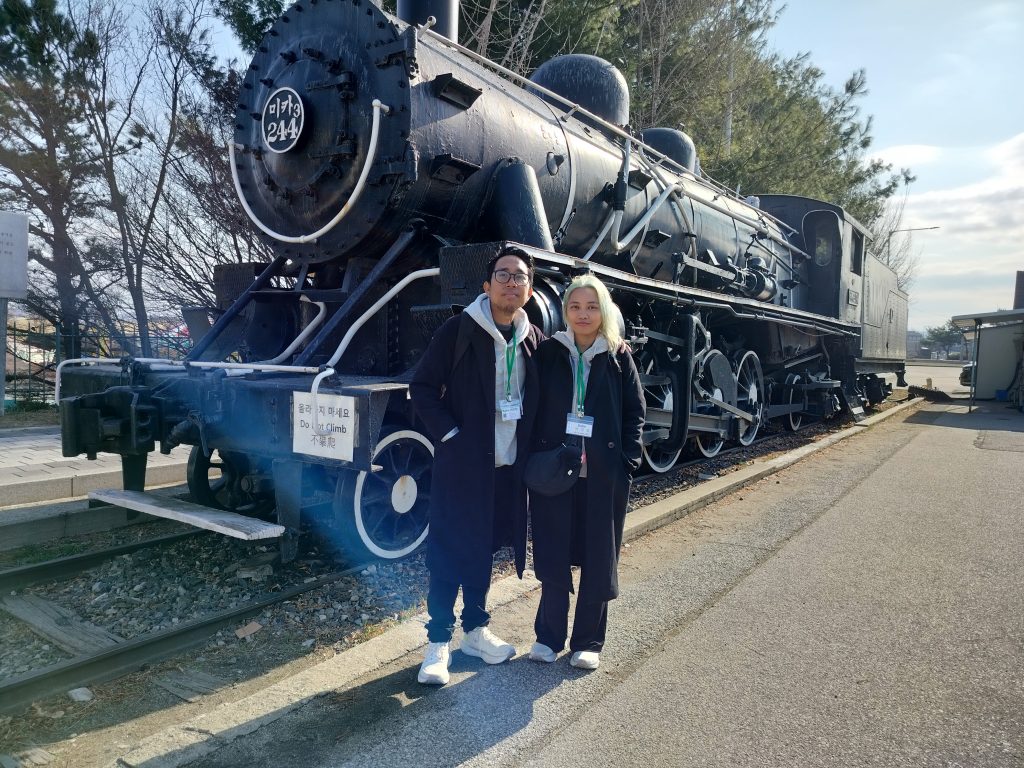
The Gyeongui Train Line
Another train, which is the Gyeongui Line, is a historic railway line that once connected Seoul to Pyongyang. Amazing, right?
Dora Observatory Deck
After Peace park, we headed to the DMZ area and what we’ve been waiting for is here *drumroll* – to see North Korea! Finally!
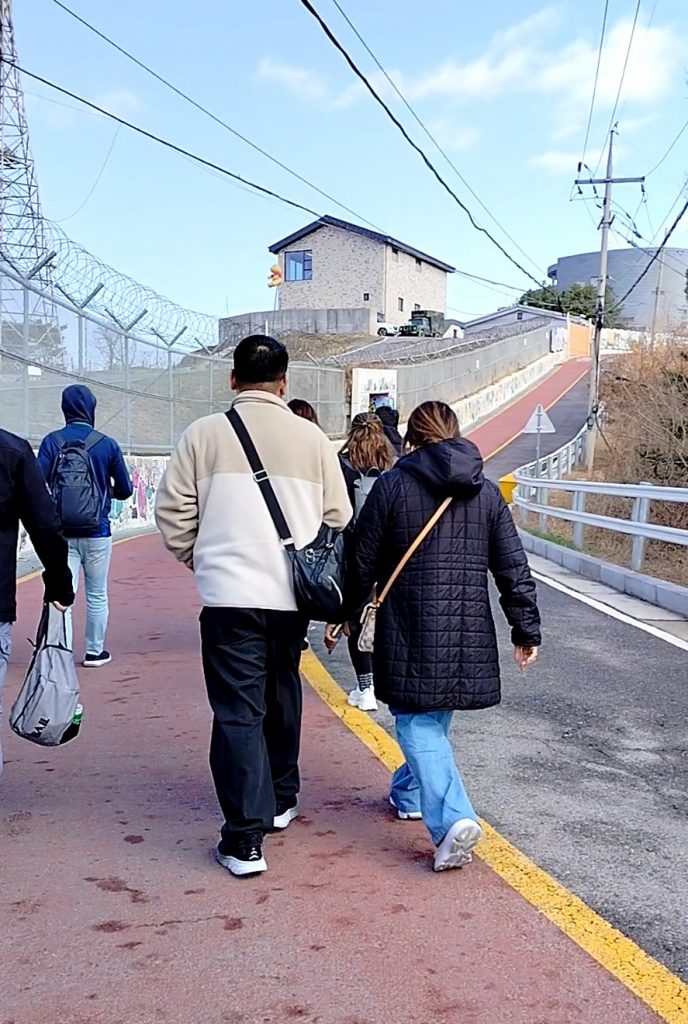
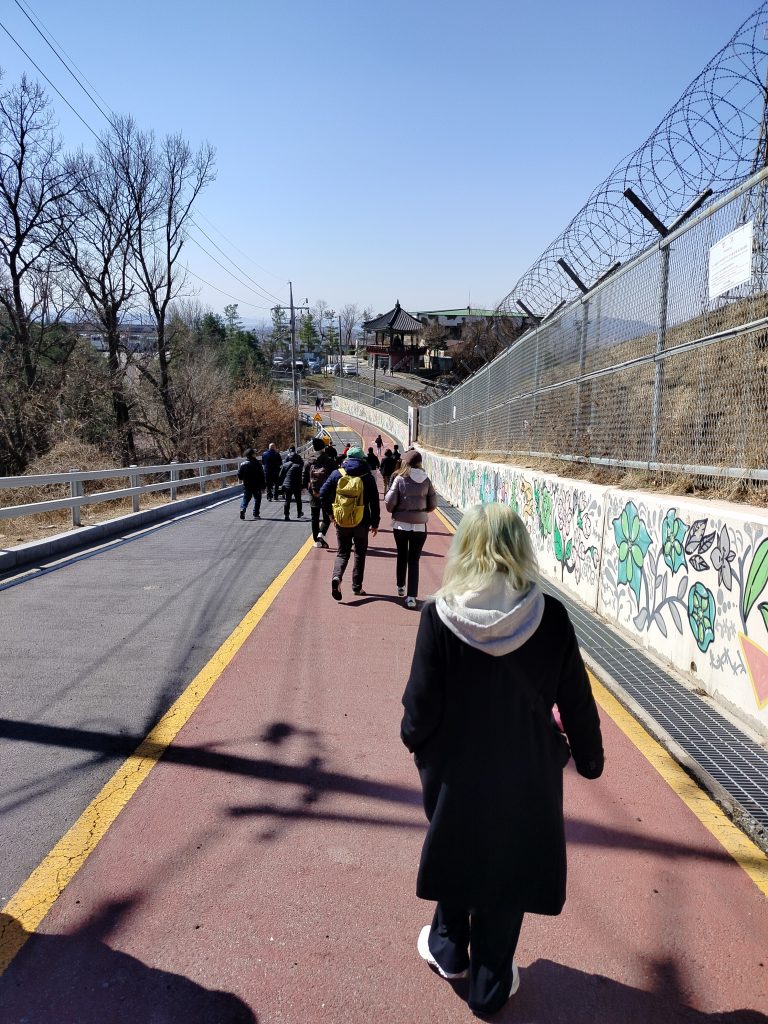
We had to hike up to the observatory deck for a few minutes, and thanks to the cold weather, we didn’t feel tired at all. While walking, the guide kept reminding us not to take photos of North Korea’s side to prevent any tension between the two countries. If you break the law, everyone will be asked to leave the tour. That’s how strict they are!
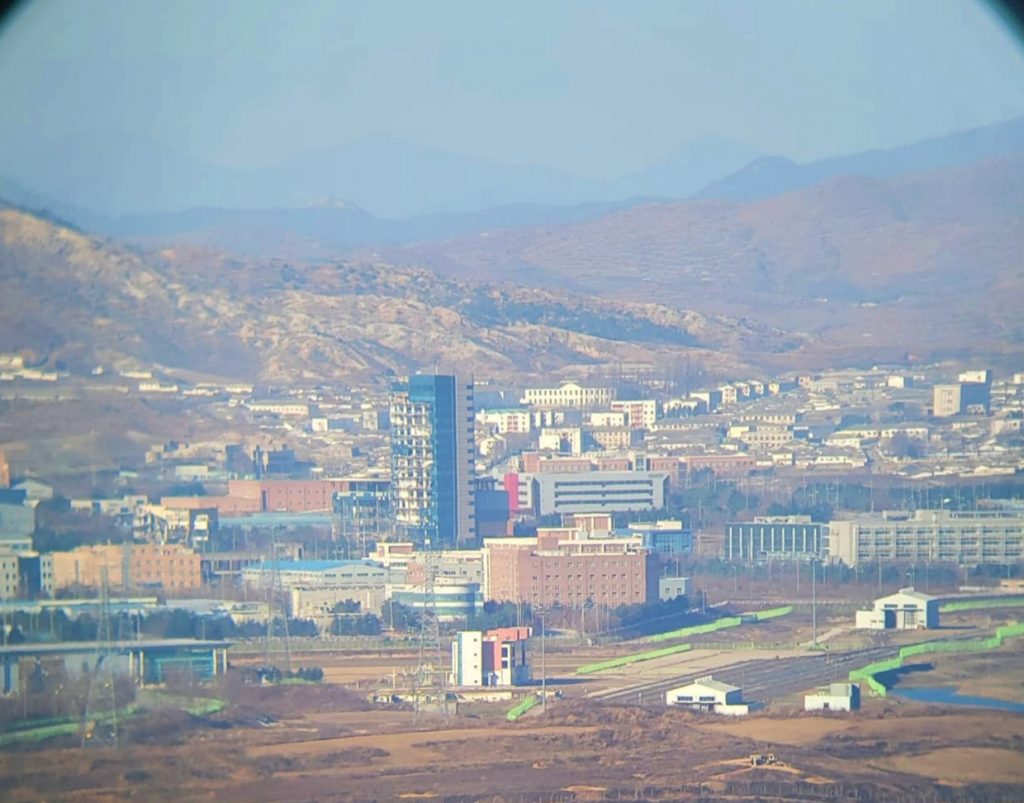
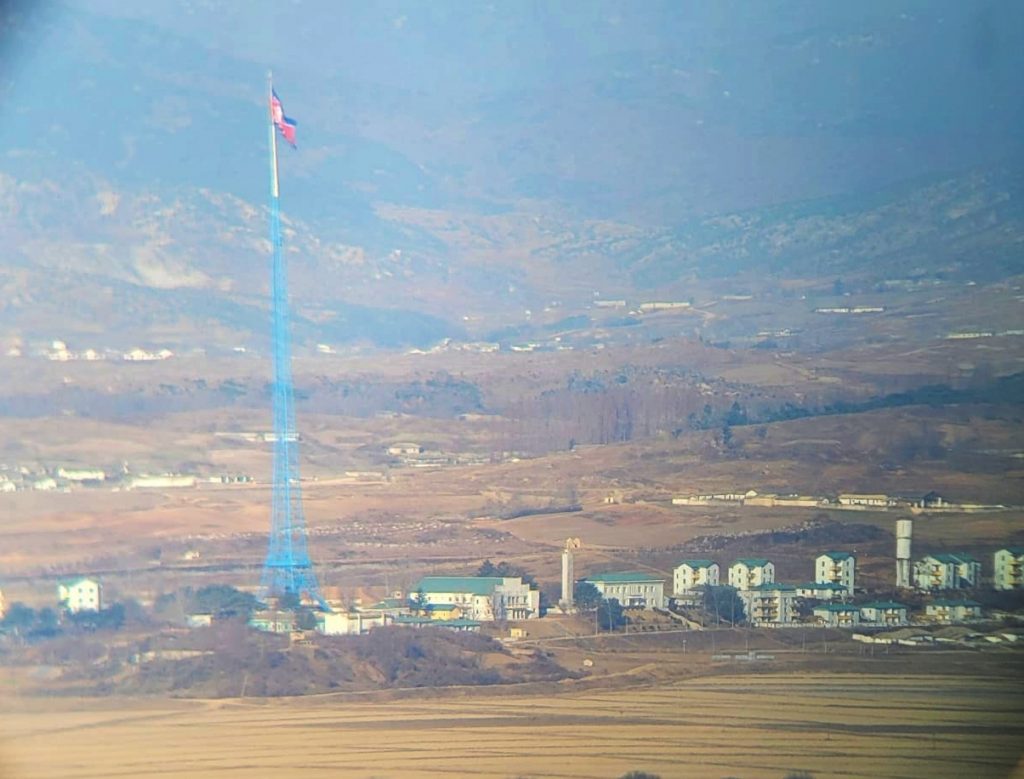
When we arrived, we were so amazed that I couldn’t take my eyes off North Korea’s “fake city,” as the guide described it.
The photos below were sent by our guide that we can use and upload so we’re still very happy about it! And this is how the North Korea looks like literally from the binoculars.
Third Infiltration Tunnel
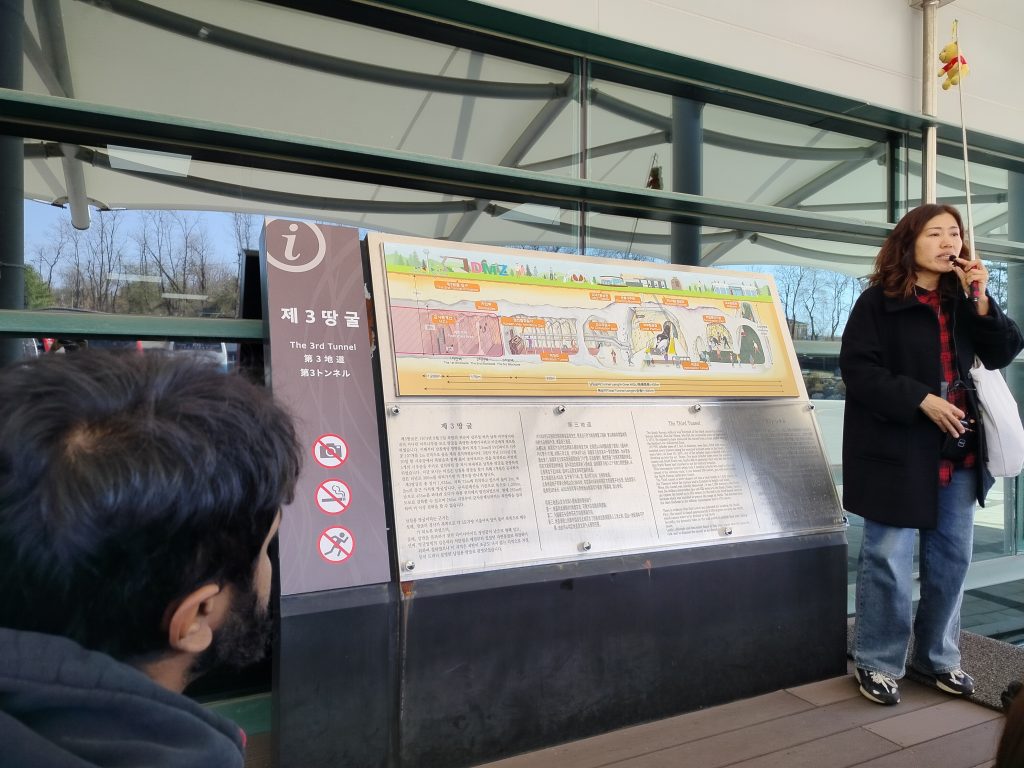
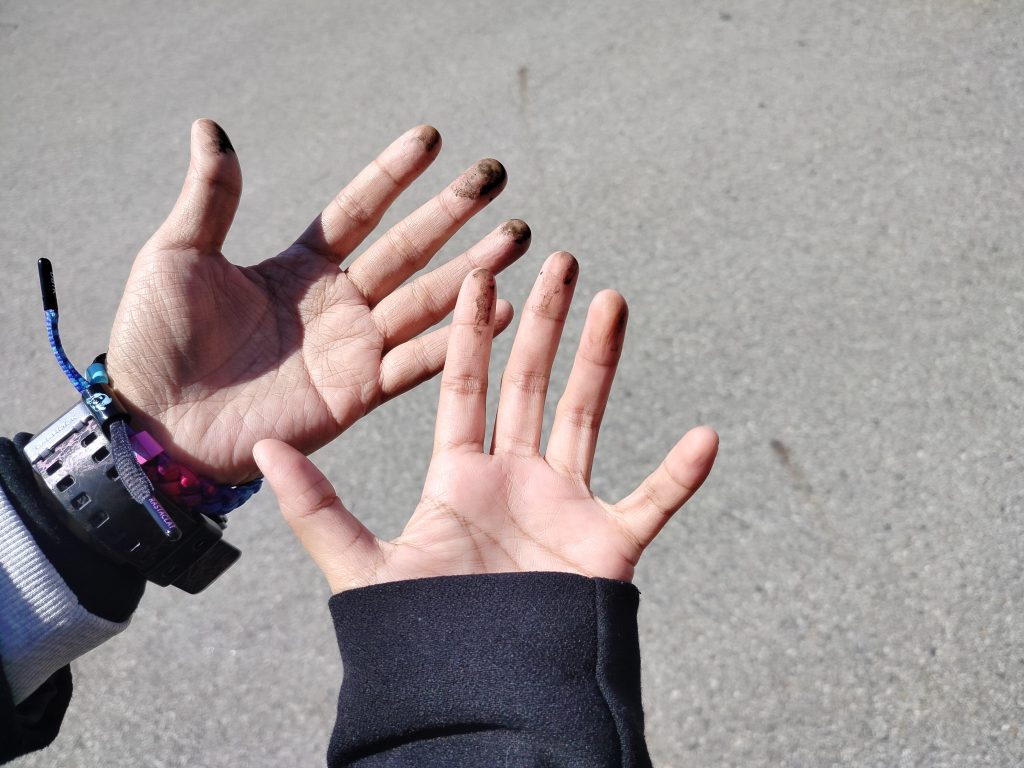
That day, we also learned that there are four infiltration tunnels that were secretly dug by North Koreans to get into South Korea, and it’s a good thing they were discovered. The most famous is the Third Infiltration Tunnel, which can accommodate up to 30,000 soldiers per hour. That’s how large it is. It’s so popular that it has become a tourist attraction, and visitors are given the opportunity to enter with precautions. Again, no photos are allowed inside BUT we had a souvenir of the mud from inside as a proof that we went there LOL
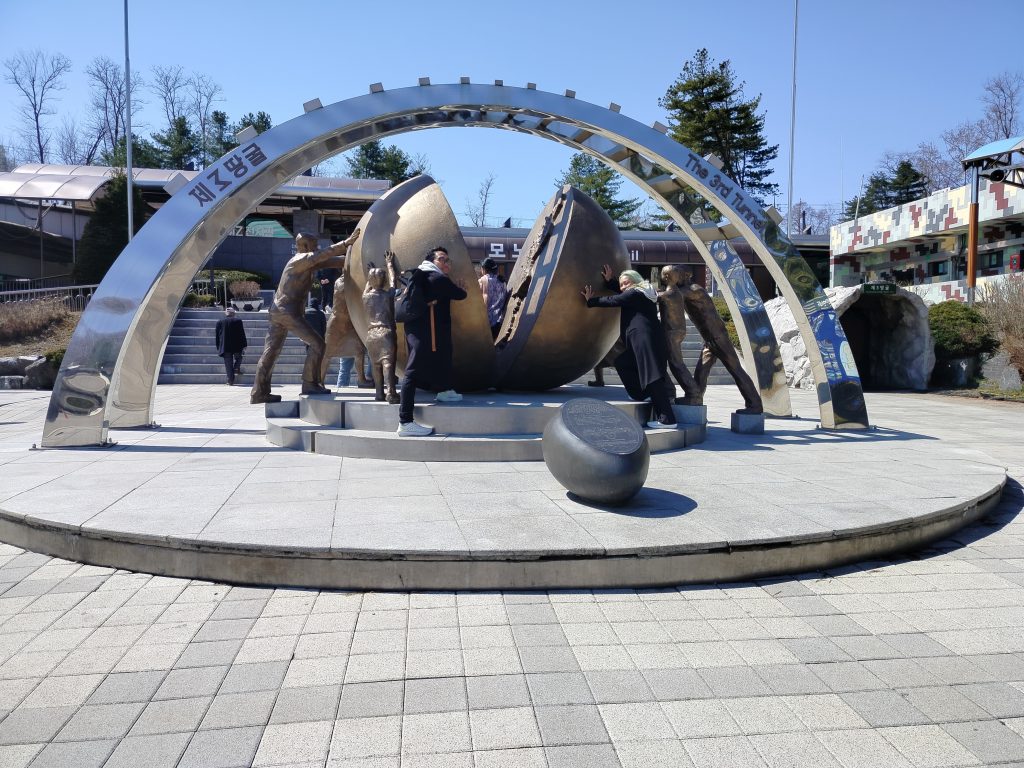
Monument to the Unification of the Divided Nation
Korean Peninsula Division Monument symbolizes the painful division between North and South Korea. The large split sphere represents one nation separated into two, while also expressing hope for future peace, reconciliation, and reunification on the Korean Peninsula.
Since we had enough time – because we returned early from the tunnel tour (or maybe we were just walking very fast) – we explored the rest of the area and took a lot of photos while the other tourists on the bus hadn’t returned yet.
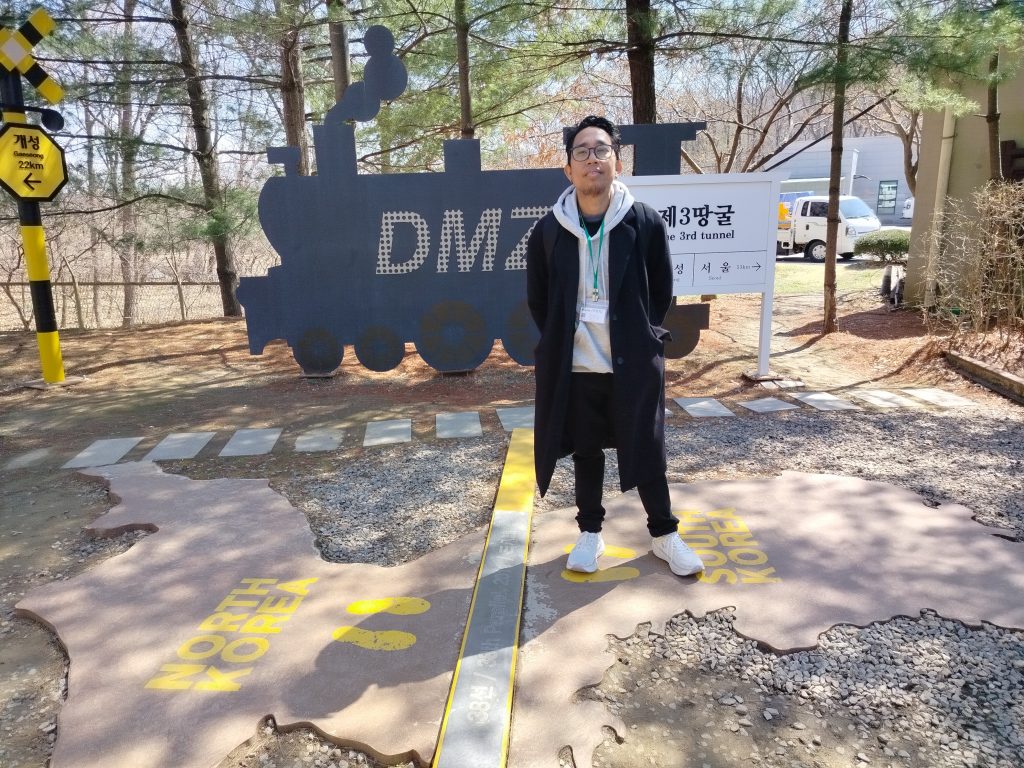
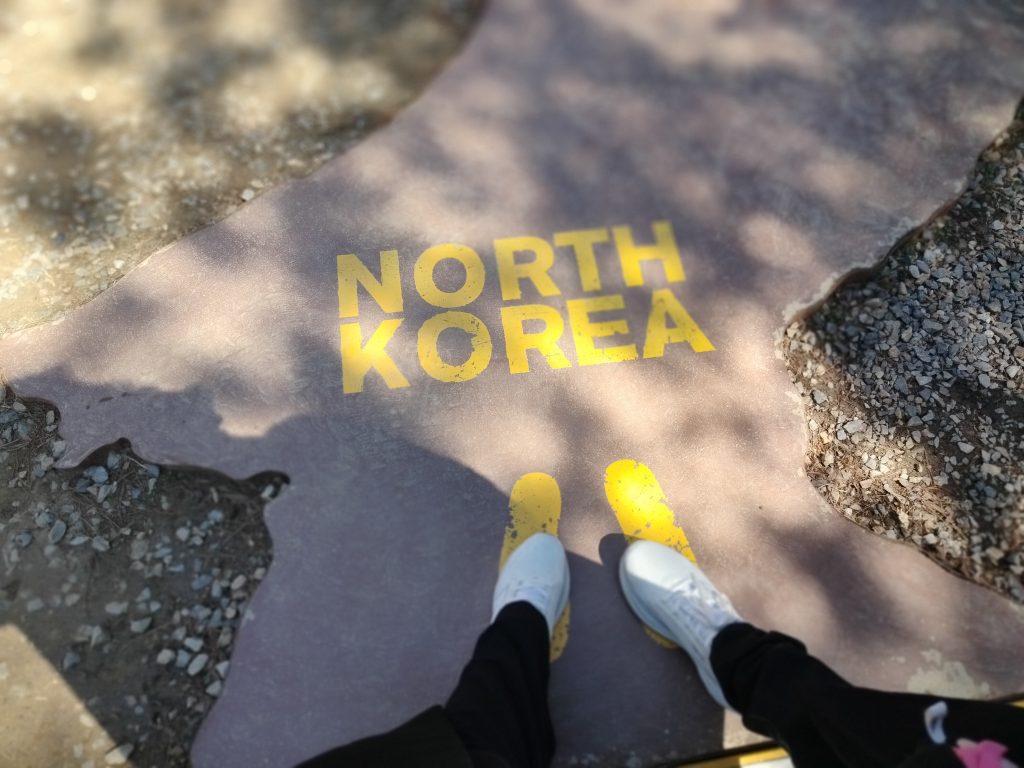

Overall, this tour is very much worth it, and we’re very happy with it! We would like to do this again in the future when we get back to South Korea but hopefully, it will be in North Korea next. LOL *cross fingers*
Read more about our complete South Korea trip during Spring HERE